Louis Vuitton
Louis Vuitton bags consistently retain 60–90% of retail value, with iconic monogram pieces and limited LVMH collabs appreciating well above retail.

About Louis Vuitton
Louis Vuitton was born in 1821 in Anchay, a small village in the Jura mountains of eastern France. At thirteen he left home on foot, making his way to Paris over two years, taking odd jobs along the route. He arrived in 1837 and apprenticed under Monsieur Maréchal, a master trunk-maker and packer whose clients included members of the French aristocracy. Vuitton proved exceptionally skilled, and within a decade he was packing trunks for Empress Eugénie, wife of Napoleon III.
In 1854, he opened his own workshop on Rue Neuve-des-Capucines, near the Place Vendôme. His first major innovation was the flat-topped trunk. At the time, trunks were rounded on top to shed rain during outdoor travel. Vuitton recognized that rail and steam travel made stacking essential, and his flat-lid design allowed trunks to be layered efficiently in cargo holds and luggage cars. It sounds simple in retrospect. It was transformative at the time.
In 1858 he introduced the Trianon canvas, a lightweight, airtight, and waterproof grey canvas that replaced the heavy leather and studded wood of traditional trunks. In 1872 he updated the canvas to a beige-and-red striped pattern. Competitors immediately copied it. His son Georges, who joined the business in the 1880s, responded by designing an entirely new pattern in 1888: the Damier canvas, a brown and beige checkerboard with the words "marque L. Vuitton déposée" woven into it. It was one of the earliest instances of a luxury brand using pattern as a form of trademark protection.
Louis Vuitton died in 1892. Georges took over and faced an immediate problem: the Trianon and Damier canvases were still being counterfeited widely. In 1896, four years after his father's death, he designed the Monogram canvas: the interlocking LV initials, four-pointed stars, and flower motifs that remain the house's most recognizable mark today. The pattern was registered as a trademark. It worked, both legally and commercially, and remains the single most copied luxury motif in history.
Georges also invented the tumbler lock in 1890, a mechanism that allowed a single key to open every trunk in a client's set. He expanded the brand internationally, opening a store on Oxford Street in London in 1885 and exhibiting at the 1900 World's Fair in Paris, where he displayed a trunk that could be fully submerged in water without leaking.
The twentieth century brought new leadership and new challenges. Gaston-Louis Vuitton, Georges' son, guided the house through two world wars and the collapse of the luxury travel market. The brand contracted significantly but survived intact. By the 1970s it had re-established itself as a global luxury house, opening directly operated stores rather than relying on department store concessions, a distribution strategy that was unusual for the era and proved decisive for brand control.
In 1987, Louis Vuitton merged with Moët Hennessy to form LVMH, the conglomerate that would become the world's largest luxury group. Bernard Arnault took control of LVMH in 1989. Under his direction, Louis Vuitton grew into the most valuable luxury brand on earth by revenue, reaching an estimated 20 billion euros in annual sales by the mid-2020s.
The appointment of Marc Jacobs as artistic director in 1997 was the pivotal creative decision of the modern era. Jacobs introduced ready-to-wear, launched the artist collaboration series starting with Stephen Sprouse in 2001, and oversaw the Murakami Monogram in 2003, which became one of the best-selling luxury products of the decade. Nicolas Ghesquière succeeded Jacobs in 2013 and has pushed the house toward a more architectural and fashion-forward direction while keeping the heritage trunk and bag lines central to the brand's commercial identity.
Today Louis Vuitton operates more than 460 stores in 50 countries. Its bags remain among the most liquid assets in luxury resale, tracked as closely as any financial instrument by collectors, investors, and the broader secondhand market.
Louis Vuitton Resale Trends
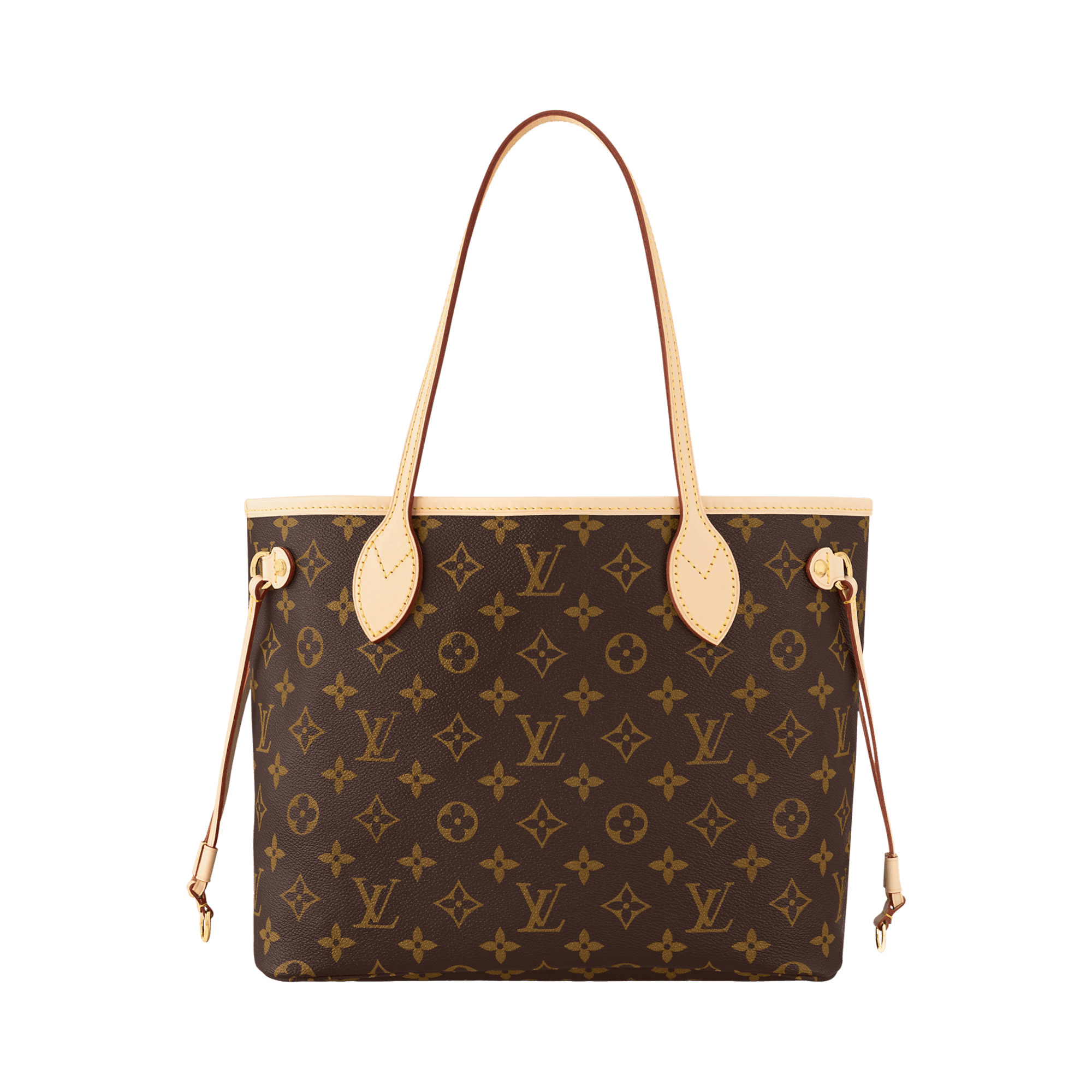
Louis Vuitton bags are the benchmark against which most luxury handbag resale is measured, combining enormous production scale with tightly managed pricing that climbs almost every year. That combination — huge supply but a retail price that only ever goes up — is what keeps resale values for the core canvas icons (the Neverfull, Speedy, and Keepall) consistently strong: buyers know that a bag bought today will almost certainly cost more to replace next year, which supports demand on the secondary market even for widely produced pieces.
Material and size drive most of the variation within any given model. Monogram and Damier coated canvas are the most liquid, most quickly resold materials across the catalog, while premium leathers like Epi, Vernis, and Monogram Empreinte command higher absolute resale prices but represent a smaller share of a higher retail cost. Compact, crossbody-capable sizes (the Alma BB, Speedy 25, Keepall 25) tend to outperform larger, top-handle-only sizes in percentage-of-retail terms, since they see more everyday use across a broader buyer base.
At the top end, limited artist collaborations (Stephen Sprouse, Takashi Murakami, and the ongoing Artycapucines program) and rare collaboration pieces like the 2017 Supreme x Louis Vuitton collection are the strongest appreciating assets in the entire brand, often trading well above their original retail price. For most buyers, though, the realistic expectation across LV's core lineup is retaining roughly 50-80% of current retail on a well-maintained bag — among the best retention rates of any handbag brand.